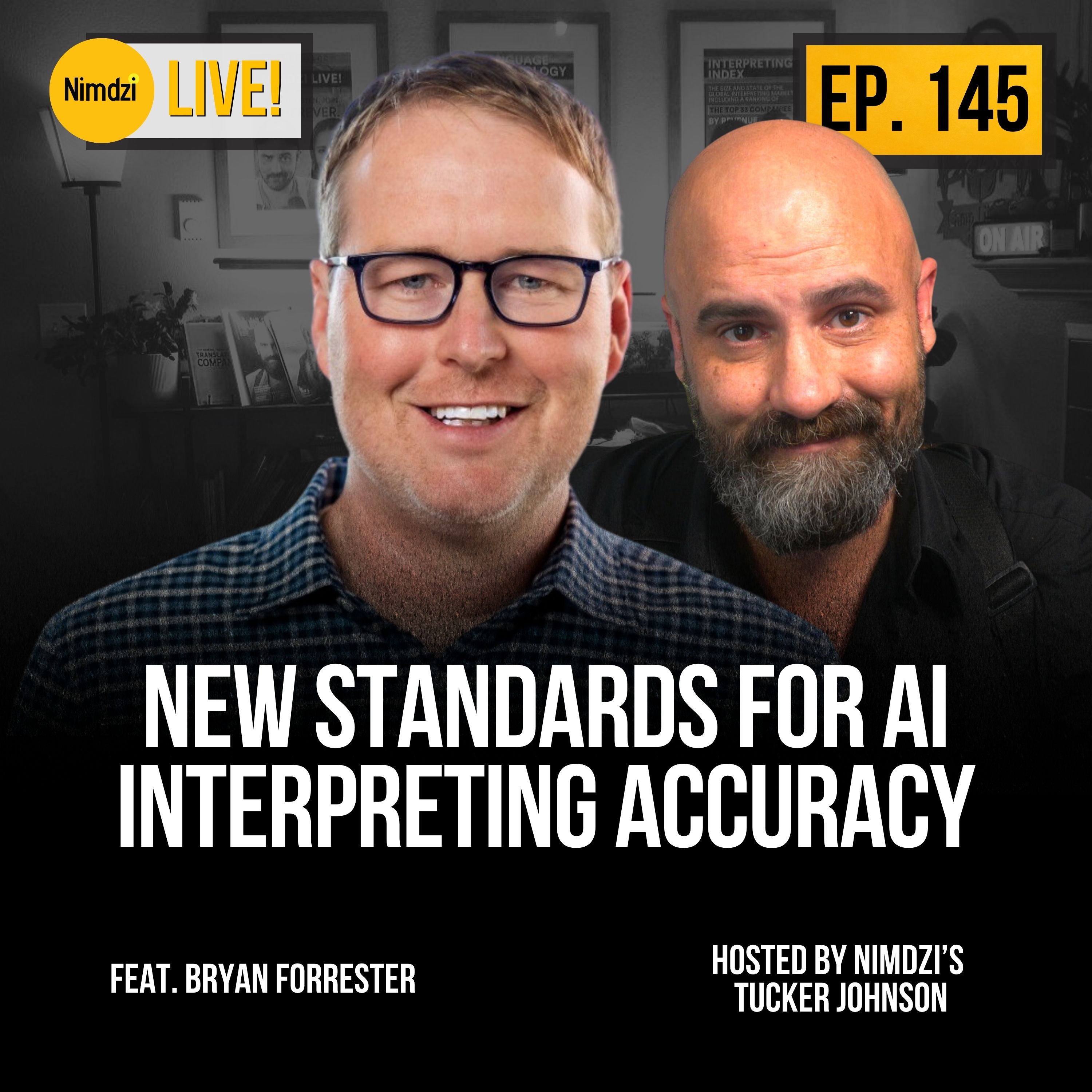
AI interpreting is growing fast, especially in high-stakes sectors like healthcare. But the industry still uses machine translation metrics to assess interpreting accuracy that weren’t designed for real-time interpreting. Most evaluations rely on demos or single scores that don’t reflect real conversations.
In this episode, Bryan Forrester, CEO of Boostlingo, will unpack why current quality measurement methods fall short and how Boostlingo’s new AI Accuracy Study uses real medical audio, expert human references, and multiple established benchmarks to give a more realistic picture of performance across conditions that include background noise, interruptions, and disfluencies.
Bryan will share lessons from this study and discuss Boostlingo’s vision for next-generation quality standards that use AI itself to measure interpreting quality more reliably and efficiently. The goal? Clearer, practical ways for buyers and practitioners to evaluate AI interpreting, blend human and machine capabilities responsibly, and raise the bar for what “accurate” really means in real-world use.
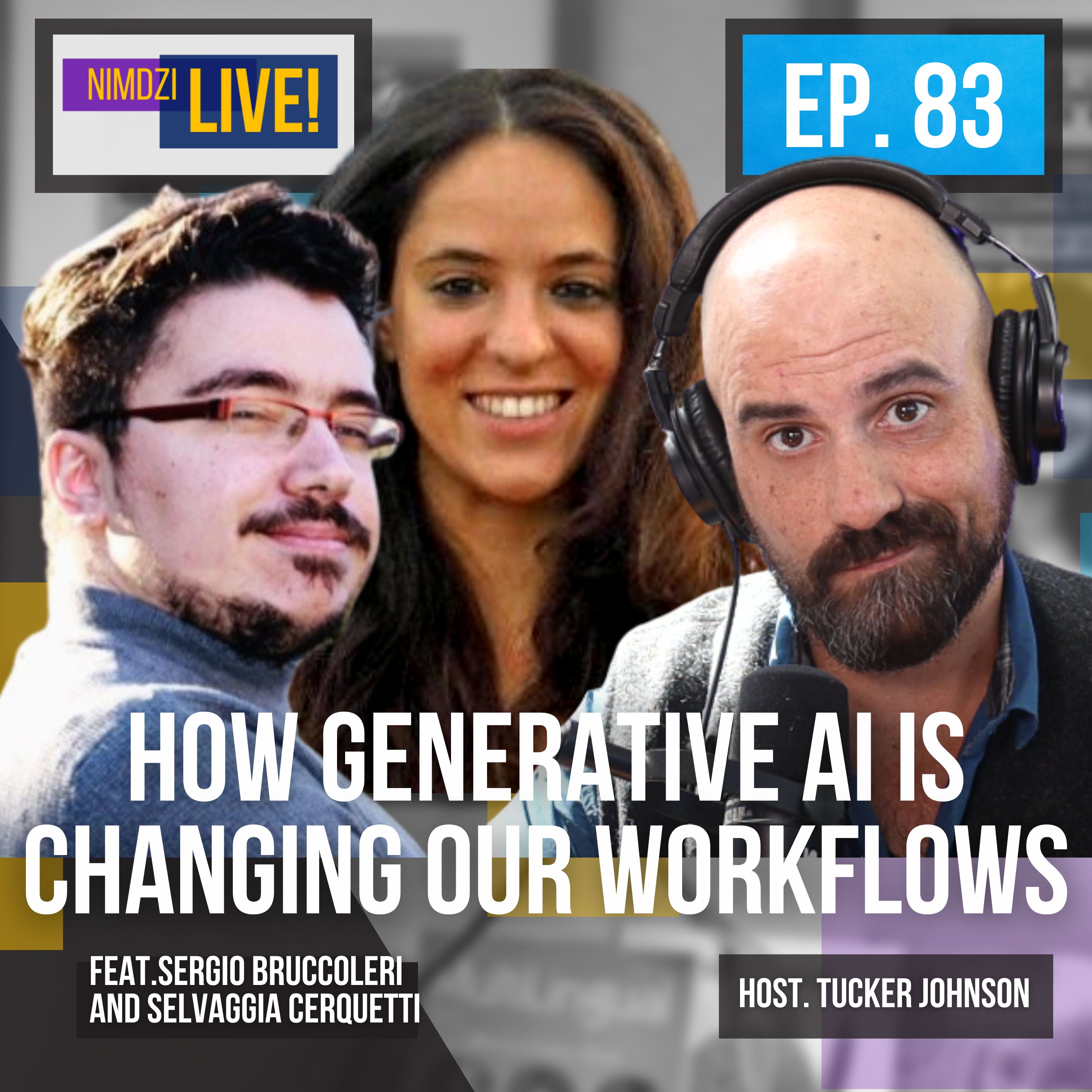
In this episode, we invited two industry experts, Sergio Bruccoleri and Selvaggia Cerquetti, to dive into the different areas of Generative AI that anyone...
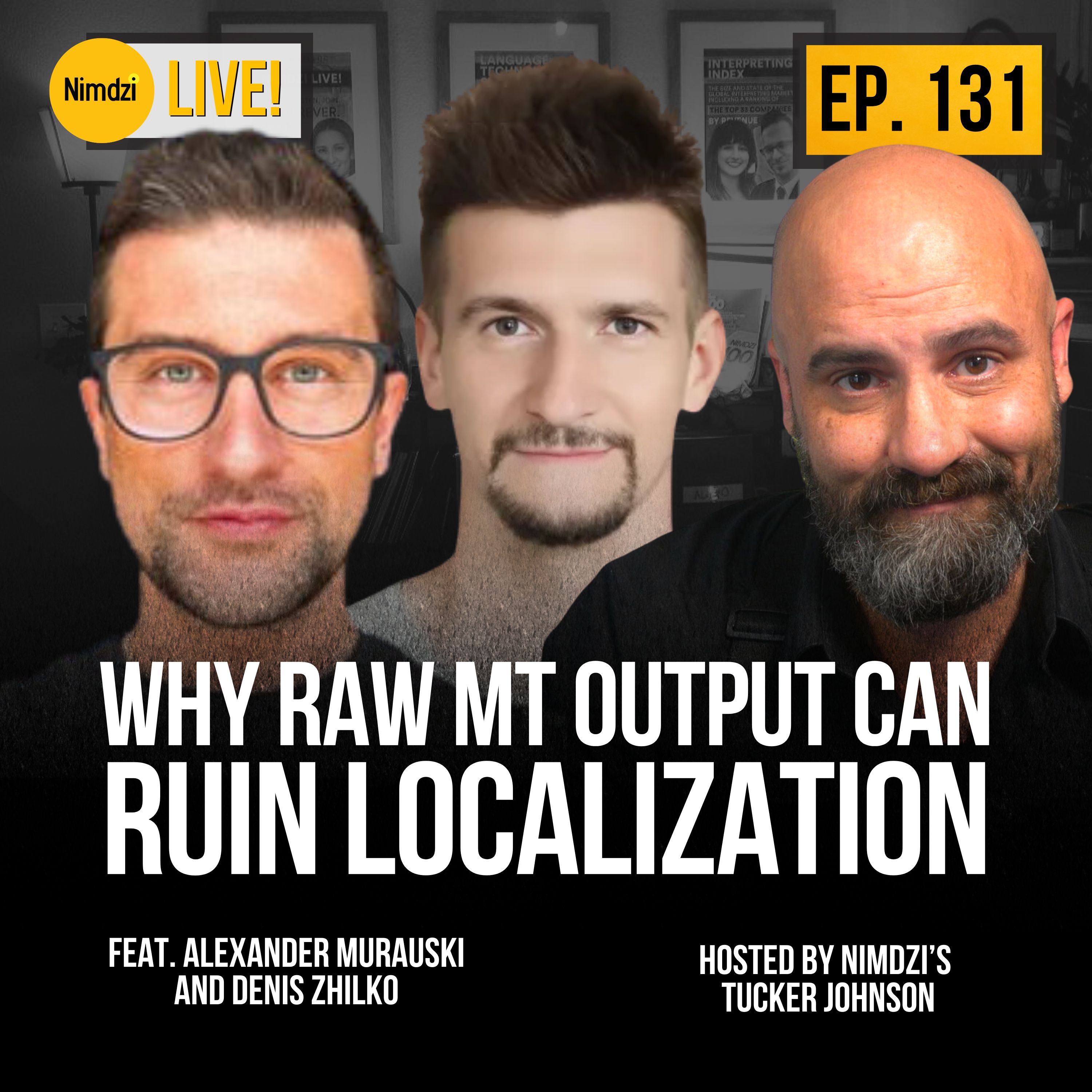
In this episode of Nimdzi Live, Alexander Murauski and Denis Zhilko discuss why using raw machine translation (MT) for localization can be a risky...
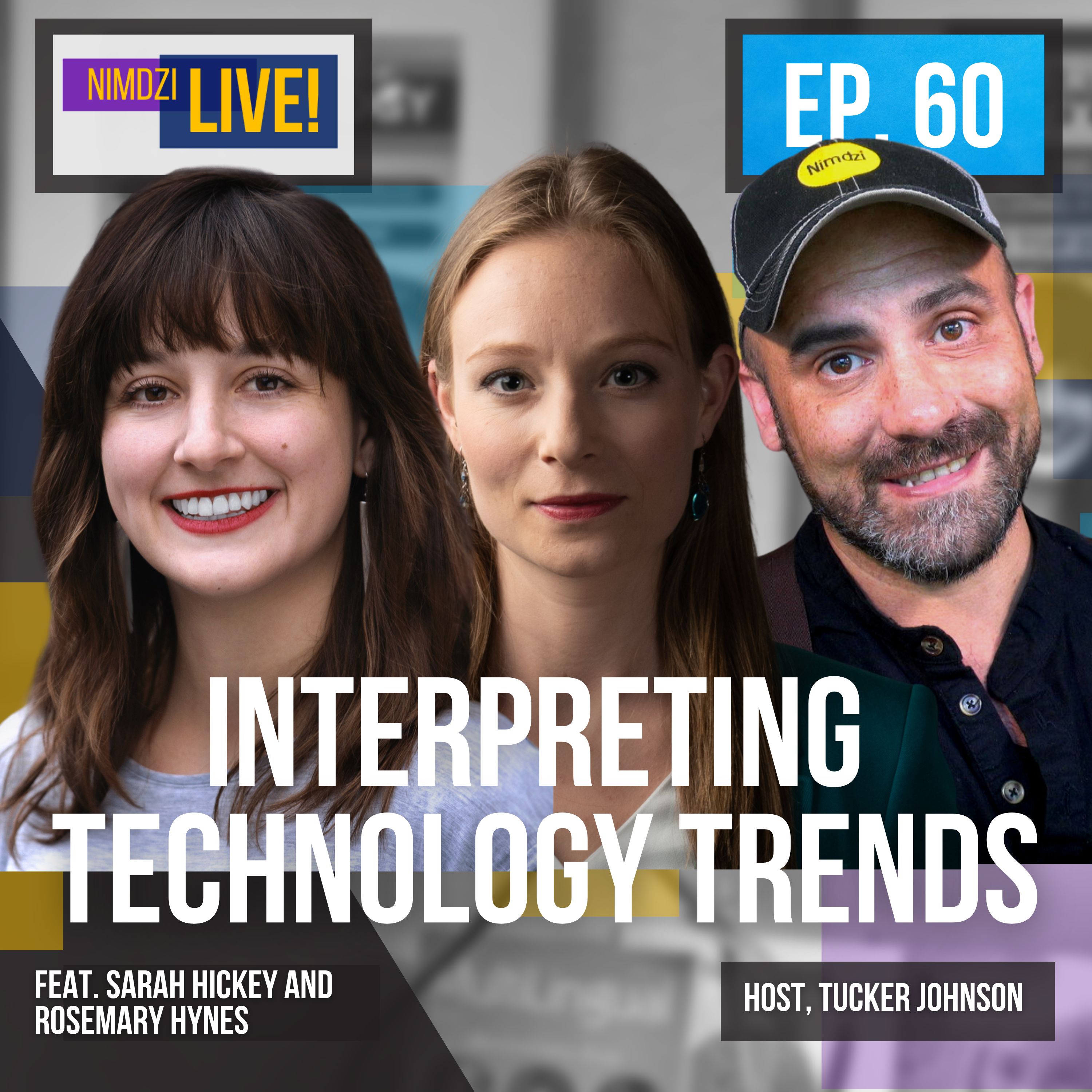
There are nine categories of language technology and each plays an important role in a mature localization program. This year’s Language Technology Atlas is...